Friday, January 4, 2013

Sense of humor is a potent weapon in dealing with setbacks

Psychology Today wrote about research into how people cope with stress and failure. One key asset (as people who read this blog regularly probably already know) is a sense of humor:

A sample of 149 students completed daily diary reports for 3 -- 14 days, reporting the most bothersome failure they experienced during the day, what strategies they used to cope with the failure, and how satisfied they felt at the end of the day. Their coping strategies included: using emotional or instrumental support; self-distraction; denial; religion; venting; substance use; self-blame; and behavioral disengagement.

Of these, using social support (both emotional and instrumental), denial, venting, behavioral disengagement, and self-blame coping had negative effects on satisfaction at the end of the day: the more students used these coping strategies in dealing with the day's most bothersome failure, the less satisfied they felt at the end of the day. What's interesting to note is that social support by others was not an effective strategy.

In contrast, positive reframing (i.e. trying to see things in a more positive light, looking for something good in what happened), acceptance and humor coping had positive effects on satisfaction: the more students used these coping strategies in dealing with failures, the more satisfied they felt at the end of the day.

The research (link - PDF) was originally published in the journal with the distinctly unhumorous name "Anxiety, Stress & Coping."

Thursday, January 3, 2013

Mistake Bank Book - Kickstarter project is launched

The project to publish the Mistake Bank book has launched (you'll see it to the right of this post). Please consider being part of this project. If you're a fan of this blog, you'll love the book, and you also will realize how important it is to spread the message that mistakes are not shameful or blame-worthy, but that they are tools to learn and improve from.

I have two "asks" here. One, please check out the project and support it if you can. And, two, please help get the word out by sharing the project with your social networks. The URL for the project is http://www.kickstarter.com/projects/jmcaddell/lets-publish-the-mistake-bank-book

Thanks very much.

regards, John

Wednesday, January 2, 2013

How to make use of a failure

There's a nice post on LinkedIn by Maria Gottschalk titled "Moving Through Failure." Gottschalk's advice is similar to that of Dean Shepherd in "Lemons to Lemonade" and seen in many other posts on this site. Gottschalk usefully urges us, when reflecting on failure, to ignore external factors and focus on the things we did that contributed to the failure, and how we can act differently in the future to prevent a similar failure. And she shares her own failure story:

At one time, I worked as an internal researcher for a large organization. I was responsible for a key customer research project. After reviewing the yearly numbers, I became extremely alarmed that if strategy wasn't altered, we were bound to lose customers. I reported this information to leadership - and they were visibly shaken - but they did not shift strategy. They felt confident that they had things under control. I suspected that they didn't fully realize the levity of the situation, and unfortunatley as the year progressed, sizable customer losses followed. Ultimately, I hadn't convinced them to take action. The onus was on me. A clear failure on my part - as it was my primary role to counsel them.

I do realize that I was not in control of their chosen course of action. However, moving forward, I always make one last effort to change opinions, by meeting separately with individual stakeholders. Only, at that point am I fully satisfied that I have done my part - my "homage" to the original failure.

Despite the fact that others were truly accountable for the decision, Gottschalk showed a sense of agency by scrutinizing her role and making a concrete decision to do more the next time she was faced with a similar situation.

Monday, December 31, 2012

Eight 2012 posts you might have missed

As we wrap up the year, here are a few posts that struck me as notable from the past 12 months.

Paul Downs: if you don't understand why a boss wouldn't give up, don't start your own company (June 19)

Steven Johnson: "We have a tendency to dismiss error" when we shouldn't (June 27)

A good model can be useful even when it fails (October 29)

"Wrong thinking" is a key part of imagination (June 26)

Jay Goltz - lessons from hiring & firing 8 production managers (May 17)

Mistake stories come alive when we discuss them (April 17)

Peyton Manning going to Denver: "I have to go from now and make it the right decision" (March 22). Of course, he did make it the right decision. Denver is the #1 seed in the AFC playoffs.

A thought on due diligence (February 9)

Have a great 2013 and keep making productive mistakes!

"It is imperfection — not perfection — that is the end result of the program written into that formidably complex engine that is the human brain"

"It is imperfection — not perfection — that is the end result of the program written into that formidably complex engine that is the human brain."

Nobel-Prize-winning researcher Dr. Rita Levi-Montalcini, from her autobiography as quoted in the New York Times. Dr. Levi-Montalcini died last week at age 103.

Thursday, December 27, 2012

"We must learn to love uncertainty and failure"

This is from the 15 Jan 2011 edition of the Guardian. Not brand-new, but the message is still current:

"We must learn to love uncertainty and failure, say leading thinkers"

Being comfortable with uncertainty, knowing the limits of what science can tell us, and understanding the worth of failure are all valuable tools that would improve people's lives, according to some of the world's leading thinkers.

The ideas were submitted as part of an annual exercise by the web magazine Edge, which invites scientists, philosophers and artists to opine on a major question of the moment. This year it was, "What scientific concept would improve everybody's cognitive toolkit?"

The magazine called for "shorthand abstractions" – a way of encapsulating an idea or scientific concept into a short description that could be used as a component of bigger questions.

You can read the rest of the piece here.

Hat tip to David Cancel.

Sunday, December 23, 2012

A misunderstanding redirects a career

Mistakes can take you to new places. That's a theme of the upcoming Mistake Bank book, and it was underlined in a New York Times interview of Blair LaCorte, CEO of XOJets, an executive jet airliner. LaCorte explained how he first got into high tech:

My dad had advised me to work for people I wanted to learn from. I always remembered Eric Herr, who had been a managing partner at the Michael Allen Company, a consulting firm where I had worked one summer in business school. I contacted him and he mentioned a position at Sun, which I assumed meant Sun Oil. I told him I'd take it, that I trusted him and that I didn't need to know any more. I told my friends I was taking a leave from consulting to work at Sun Oil for a year. When the offer letter arrived, however, it was from Sun Microsystems.

That misunderstanding changed my life. For the next 12 years, I worked at a variety of technology companies. I loved the innovation in this industry; merging my business skills with colleagues' technical skills allowed us to move very quickly.

Another idea is proved in this story: always take your dad's advice.

Friday, December 21, 2012

Mistake Bank book cover image

Hi, all, I wanted to share this very cool cover that Michael Morris has designed for the book. I'm sure it will evolve as we get toward final publication, but it looks great already. Thanks Michael!


Keep your eyes peeled for a Kickstarter campaign kicking off after the New Year. Pass the word!

Thursday, December 20, 2012

Carol Bartz on what you can learn from a bad boss, and watch out for that flying tissue box!

Having a lousy boss is one of the most unpleasant experiences possible in the workplace. Is it possible, though, that there is a silver lining in having a bad boss? Carol Bartz, the former CEO of Yahoo and Autodesk, thinks so. In the way that "mistakes make deep imprints," your experiences with a bad boss can help you learn what not to do when you rise to that level yourself. Bartz described her experiences at an event at Wharton's San Francisco Campus. They were summarized in an article in Knowledge@Wharton:

While universally despised, the dreaded bad boss, said Bartz, can teach his or her unfortunate employees a great deal. "Think about the good bosses you had. You remember that they're good, but you don't know exactly why. But with a bad boss, you remember every detail about whatever [he or she] did. You really have it in sharp focus. Not that you should run off and be bad managers, but we often can be shaped more by some of the negative things that happen in our lives, like a bad boss. And of course I have a little bit of Silicon Valley in me, which says, 'A bad boss will soon move on to be somebody else's bad boss, so just wait him out.' But if you happen to be in a business where they wait around for 10 years, then maybe you've got to move out first."

Being assigned to a bad boss may not be your mistake, but it's a mistake nonetheless, so you might as well learn from it. And keep your poise, like this woman in a NY Times piece by Phyllis Korkki:

Noreen P. Denihan is an executive assistant who sees her job as managing the life of her boss, Donald J. Gogel, chief executive of the private equity firm Clayton, Dubilier & Rice. As such, she has no problem taking care of some of his personal responsibilities.

Ms. Denihan has been an assistant since 1976 and can remember, in one of her previous workplaces, when someone threw a box of tissues at her because the type she had bought would irritate his nose.

“The box hit the floor and I just stepped over it” as if nothing had happened, she said.

When people fly off the handle in my presence, I tell myself that it's because of their own issues and struggles, rather than anything I did. I tell myself that, but I still get offended and angry. I wish I had Noreen Denihan's equanimity. She is a rock star.

Tuesday, December 18, 2012

#1 Employee fear? Making a mistake

There comes a time, when you've been writing about learning from mistakes for five years or so, when you think the message must have gotten through - when mistakes happen, they are often due to process or business complexities or miscommunication rather than incompetence or carelessness. Acknowledging and sharing them are essential tools to drive learning and improvement in the organization as a whole. They should not be hidden, or fixed quietly. In short, they are not to be dreaded.

Then reality strikes. HR consulting company Robert Half International surveyed employees to assess the primary fears in the workplace. "Making errors on the job" was the #1 response, cited by 28% of the respondents.

Which just goes to show how much work we have left to do. Bosses, you need to change this situation. Can you please read some of the top books of 2011 and 2012 on this topic? Or read this excerpt from the Mistake Bank book and order a copy when it is published after the New Year? Thank you.

[Hat tip to David K. Williams and Mary Michelle Scott for pointing out the survey.]

Thursday, December 13, 2012

For nonprofits, sharing stories of failure reduces their potency

Many nonprofits struggle with difficulties in mission, fundraising and viability, and other issues. So failure is familiar in this sector. Recently Sarika Bansal of the New York Times wrote about how nonprofits deal with failure in the newspaper's Opinionator blog. Bansal writes:

Seven years ago, the consulting group Bridgespan presented details on the performance of several prestigious nonprofits. Nearly all of them had one thing in common — failure. These organizations had a point at which they struggled financially, stalled on a project or experienced high rates of attrition. “Everyone in the room had the same response, which was relief,” said Paul Schmitz, the chief executive of the nonprofit Public Allies. “It was good to see that I wasn’t the only one struggling with these things.”

And the following is two good reasons why hiding failure is counterproductive:

“Not talking about [failure] is the worst thing you can do, as it means you’re not helping the rest of the organization learn from it,” said Jill Vialet, who runs the nonprofit Playworks. “It gives [the failure] a power and a weight that’s not only unnecessary, but damaging.” Vialet instead supports failing “out loud” and “forward,” meaning that the people involved in the failure should speak about it openly and work to prevent history from repeating itself.

Finally, Bansal points to a website that collects failure stories submitted by nonprofits (we love these sites!): http://www.admittingfailure.com/

Wednesday, December 12, 2012

"You look for one thing and find something else"

"That's the way it goes sometimes: you look for one thing and find something else." Sancho Panza.

Don Quixote, Vol 1, chapter 16

From the Burton Raffel English translation of "Don Quixote."

This echoes the Ira Glass - via Kathryn Schulz - definition of a story (and one of the ways to view a mistake that I emphasize in the upcoming Mistake Bank book).

Tuesday, December 11, 2012

Don Quixote: "In every disaster, fortune always leaves a door ajar"

"In every disaster, fortune always leaves a door ajar."

Don Quixote, Vol 1, chapter 15

For the past few years, I've picked out a long classic novel to read as the days grow short. Last year it was "Anna Karenina" (one of my top books of 2012). And this year it's the Burton Raffel English translation of "Don Quixote."

And now, after so many years have passed since first reading, Cervantes seems to be writing about the power of mistakes and delusions. The above quote underlines that point.

Monday, December 10, 2012

Best Books of the Year 2012

These are the best books I've read this year concerning human error, making mistakes and learning from them. (They may have been published in prior years.)

1. "Teaming: How Organizations Learn, Innovate, and Compete in the Knowledge Economy," Amy Edmondson. The preeminent researcher on organizational learning and development sums up her 20-year career in this book. It covers teamwork, collaboration and leadership, and is more full of common sense than a shelfload of self-help books. Money quote: "Facing the potential for larger failure when smaller failures interact, leaders in complex organizations must promote resiliency by acknowledging that failure is inevitable, making it psychologically safe to report and discuss problems, and promoting habits of vigilance that support rapid detection and responsiveness."

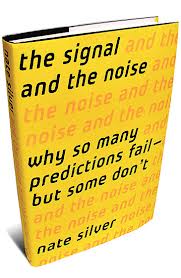
2. "The Signal and the Noise: Why Most Predictions Fail but Some Don't," Nate Silver. Almost a companion piece to Kahneman's "Thinking, Fast and Slow," which was on last year's list. Silver attacks misplaced self-confidence in human forecasting and shows us that by embracing uncertainty and weighing the odds, we are capable of making far better predictions than we usually do.

3. "From Lemons to Lemonade: Squeeze Every Last Drop of Success Out of Your Mistakes," Dean Shepherd. A researcher from Indiana University takes a personal-psychology viewpoint on the mistakes question. With very useful discussions on various ways to bounce back from mistakes, and why we feel so bad when we fail, this book has a prominent place in my "Mistake Learner's Bookshelf." Money quote: "Failure is not the opposite of success."

4. "Adapt: Why Success Always Starts with Failure," Tim Harford. Looking at human organizations as complex-adaptive systems, Harford shows many examples of groups finding success by responding to initial failure by adapting and learning; as well as an equal number of those who didn't adapt and failed utterly as a result. His views, coming from an economics background, and Amy Edmondson's, from an organizational development perspective, mesh nicely.

5. "Anna Karenina," by Leo Tolstoy. Translated by Richard Pevear and Larissa Volokhonsky. If you want to learn about human fallibility and the trouble it can cause, you can't do better than to consult the Russian masters. If "War and Peace" illustrated bureaucratic and organizational folly, this book does the same with social relations. And, did you hear there's a movie out?

Thursday, December 6, 2012

Excerpt from "The Hard Way: A Book About Courageous Failure"

What follows is a brief excerpt of the book "The Hard Way: A Book About Courageous Failure," by Tuuti Piippo and Miika Peltola (original title: "Kantapään kautta"), which includes 15 in-depth interviews of Finnish top entrepreneurs, artists and leaders and their failure stories. It was translated from the original Finnish by Tuuti Piippo. We thank Tuuti and Miika for sharing this excerpt and look forward to the entire book being available in English soon!


There is no failure


Joanne was 21 and restless.

She wanted to write novels for a living, but her mother and father would not agree with the idea. They feared that the girl’s overflowing imagination would never pay for a house or a pension, no matter how amusing it might be.

The family settled for compromise. After graduating, Joanne would study languages instead of literature. She went to college and changed her major to Classics without telling her family.

Joanne was not afraid of being poor, like her parents who came from a background of poverty. She was afraid of failure. At the university, success meant excelling in exams. Joanne would rather sit in a cafe writing stories than attend lectures, but somehow managed to get through the exams.

Seven years after her graduation, Joanne’s marriage had just broken to pieces. Her mother had died unexpectedly. She was an unemployed single parent, depressed, with just enough money to stay off the street.

She was the worst failure she knew – her biggest fears, as well as those of her parents, had become a reality. Joanne felt like she was in a pitch black tunnel, but could not see the famous light at the end.

Her utter failure stripped down everything but the essential. Joanne finally stopped pretending and confessed to herself that she was a writer. So, she used all her energy to write out an idea she’d gotten.

She was still alive. It was a good start.

If Joanne had managed to hold one of her temporary jobs, succeeded even a little, she might not have found the determination to carry out her calling. The failure taught and revealed more willpower and self-discipline than any passed exam ever had. She took the insight and empowerment as a sign that she should keep trying.

Joanne wrote on her old typewriter in coffee shops. Every time her daughter fell asleep in her stroller, she would start typing like mad. When she had finished her first manuscript, she tucked the first three chapters in an envelope and sent them to an agent.

The envelope came back quickly with a reply: No, thanks.

On the second try, she found an agency that would start offering the manuscript to publishers. They declined one after another.

After one year and twelve rejections, Bloomsbury got interested. They offered Joanne a £1500 advance for the book. She accepted the offer, jumping and screaming from joy. The publisher made a first edition of one thousand copies.

The book was called "Harry Potter and the Philosopher’s Stone" [in the US, "Harry Potter and the Sorcerer's Stone"]. Joanne is now better known as J. K. Rowling.

copyright Tuuti Piippo and Miika Peltola. All rights reserved. Used by permission.

Wednesday, December 5, 2012

"Never give up your right to be wrong"

I found this artfully-written note pinned to the bulletin board at the kids' workout room at the local YMCA:


It says:

Aim for success, not perfection.

Never give up your right to be wrong because then you will lose the ability to learn new things and move forward with your life.

Remember that fear always lurks behind perfectionism. Confronting your fears and allowing yourself the right to be human can paradoxically make you a far happier and more productive person!!

I couldn't have said it better myself!

Tuesday, December 4, 2012

Growing past a microbusiness requires letting managers make mistakes

From the New York Times "You're The Boss" blog, Josh Patrick discusses how a business changes as it grows from a "microbusiness" - i.e., very small, to a "lower middle" business - one with more than $5 million in sales and more than two dozen employees. He describes his experience in growing his own vending machine business to that level:

The real change for me was learning how to manage. I couldn’t do it by brute force. I had to learn to set standards and then to inspect to make sure our standards were being met. My dashboard was part of the solution. The other part was providing face-to-face feedback and learning to hold others accountable.

That required learning to trust and to allow our managers to make mistakes. When we were a small company, mistakes weren’t O.K. They happened, but no one would admit they happened, least of all me. As we grew I had to learn to let others make decisions and then learn from their mistakes. The key was keeping the mistakes small enough that they didn’t sink the business. The better I got at allowing myself and others to learn from their mistakes, the better my company became.

In a small business, the owner makes every meaningful decision. Workers follow her direction. But as Patrick points out, by the time you approach the lower-middle size, there are simply too many decisions to make. Meaningful delegation is required. And, with that, the ability for people to mess up and learn from it. "Creating the Culture for Learning From Mistakes" is a chapter in the upcoming Mistake Bank book, and the process described here is part of that.

Tuesday, November 27, 2012

Martha Stewart gets a second chance to be an icon

One theme of the upcoming Mistake Bank book is that we are offered second chances if we make a mistake. This is illustrated in a recent New York Times article portraying Martha Stewart as a newly-minted icon of craftspeople and artisans. Here's an excerpt:

In and around the Williamsburg neighborhood of Brooklyn, Martha Stewart has spawned meet-up groups for people who want to work on crafting, blog items about her sighting at the Brooklyn Bowl rock club, sales of her books at the Brooklyn Kitchen cook shop and decorative displays in the shop window of Urban Rustic, a market and cafe.

Beyond Williamsburg, Ms. Stewart has drawn crafting and baking fans from Saratoga Springs to San Francisco who have made MarthaStewart.com the most-shared site among its rivals on the social site Pinterest, according to Pinfluencer.

While some Martha Stewart fans abandoned their magazine subscriptions and Ms. Stewart’s high-thread-count sheets after she went to prison over her 2004 conviction for lying to federal investigators about a stock sale, this new generation of fans say her prison time only gives her more street credibility.

“She’s such a Suzy homemaker and also did some time in the joint,” said Luis Illades, an owner of Urban Rustic, where some of Ms. Stewart’s store-bought decorations appeared.

“That has helped cement her iconic image. Before, she was someone your mother would follow.”

Crystal Sloane, 29, who grew up on a dairy farm outside Saratoga Springs, N.Y., reading her mother’s issues of Martha Stewart Living, has begun her own business called Vintage by Crystal, designing miniature animals that Ms. Stewart eventually featured on “The Martha Stewart Show.”

“She’s like the Jesus of the craft world,” she said.

“Not that I like criminals, but I heard that she just took some bad advice. Anybody can make mistakes.”


Tuesday, November 20, 2012

Excerpt from The Mistake Bank book

I've mentioned a Mistake Bank book which I'm currently working on. It's titled, "The Mistake Bank: How to Succeed by Forgiving Your Mistakes and Embracing Your Failures." I have sent a draft of the book to a friend who is editing it for me. Michael Morris is working on illustrations for the book and, most immediately, I will be running a Kickstarter campaign to underwrite the first print run of the book.

Please stay tuned for more information on the Kickstarter project. Please consider supporting the project and sharing the project with your friends and colleagues. Here's a taste of the book from the Introduction:


Many years ago I worked with some great people at GTE in Tampa, Florida. I was on a six-month assignment and, during my last week there, I had a ton of things to do to get ready for my next move to Boston.

That Thursday, I had agreed to meet my friend Phil for lunch, but before that, I rushed over to another part of town to return my cable box. I ran in, dropped the box off, and ran back to my car. There was no car in the space in front of me, so instead of backing out, I zipped forward.

When the tires hit the concrete curb at the front of the parking space, I knew I was in trouble. I took my foot off the gas, but the car didn't stop until the tires had run up and over and the underside of the car had fallen hard onto the curb.

I backed up over the curb again, then out of the parking space. There was a grinding noise from the bottom of the car and it wouldn't go faster than 20 miles per hour. I carefully creeped along the side roads for several miles till I reached the dealer. It took a while for them to look at the car and let me know what needed to be fixed (thankfully, it wasn't bad).

By now I was terribly late for lunch. I went to a pay phone (see how long ago it was?) and called Phil at the restaurant. "I am so sorry, but I won't make it for lunch. You see, my car..."

Phil interrupted. "You need to get to the restaurant now. There are 25 people here for your goodbye lunch."

I hung up, called a cab, and eventually made it to the restaurant. In the dining room, a long stretch of tables was full of empty drink glasses, plates, and about a dozen people who were still there after 90 minutes of waiting. It was a memorable good-bye lunch, for them as well as for me. 

* * *

There are a few lessons I took away from that experience. One is that, as stated by Wharton School researcher Paul Schoemaker, “mistakes make a deep imprint.” I can remember that story in vivid detail more than twenty-five years later. Even as I write this, I can hear the sound of the car’s undercarriage crunching against the curb.

Another is that rushing doesn’t necessarily get things done faster. In fact, it can slow you down significantly.

The final lesson is that friends are precious gifts. That my colleagues would go to the trouble of planning this elaborate surprise lunch, and then hang around long after they’d finished eating to wait for my arrival, is something I’ll never forget.

Three life lessons. All from just one mistake.


Thursday, November 15, 2012

Successful businessman looks back on earlier failures

In 2010, abc.com'a Christine Brozyna wrote a piece about Bob's Red Mill, a seller of grain products, being sold to its employees via an ESOP program. In the article, company founder Bob Moore shared some lessons about business success, and failure:

Moore said there is no secret to building a successful business, just hard work and luck.

"You can sell your house, take your money, and test the waters by doing something you believe in," he said. "And maybe you'll be successful and maybe you won't, and that's what entrepreneuring has been for me, and I have failed."

Earlier in his life, Moore owned a gas station that he thought was a great success. It flourished for five years, but ultimately went under. And in 1988, his mill was burned down by an arsonist.

"I lost everything," he said. "I lost our entire investment. I know what it feels like in my stomach when you can't pay the bills."

But he learned from his mistakes and kept taking chances, eventually making his mark in American households.

Bob told a longer version of the gas station story to Inc. magazine:

To put a few extras on my family's table, I'd been working weekends at a Shell station. A sign went up on one corner saying a new Mobil station would be opening. I called, and pretty soon we had a deal. I sold our house and put the $4,500 down on the gas station. I quit my job and went into business.

In those days, you didn't just take care of cars; you took care of people. I would wipe windows, check the tires and underneath the hood. I cleared 4 and a half cents a gallon, 5 cents for high test. My bookkeeper would laugh at me. But I wore a freshly washed uniform every day, and the sun was always shining.

Then the smog started to get bad. Charlee, my wife, and I felt that getting out of L.A. would be good for the boys' health. I drove around the state looking at gas stations for sale and ended up buying one in Mammoth Lakes, California, in September 1959.

I had a pocketful of cash from selling our house and station in Los Angeles. We bought a big mobile home. We took trips with the boys. We bought a lot of things we didn't need. Mammoth Lakes was a ski town. But Thanksgiving and Christmas went by with no snow. Then we got 14 feet of snow in January! The roads were impassable. The snow was still deep in July, and that kept away the summer tourists. One year after leaving Los Angeles, I was broke.

Tuesday, November 13, 2012

Self-compassion is more important to success than self-esteem

Heidi Grant Halvorson, writing for the HBR Blog Network, asserts that self-esteem, rather than being a useful tool for enabling high performance, may instead be destructive.

Rather, the idea of self-compassion, forgiving yourself for mistakes and failures, is more beneficial, and may drive success. Writes Halvorson:

A growing body of research, including new studies by Berkeley's Juliana Breines and Serena Chen, suggest that self-compassion, rather than self-esteem, may be the key to unlocking your true potential for greatness.

Now, I know that some of you are already skeptical about a term like "self-compassion." But this is a scientific, data-driven argument — not feel-good pop psychology. So hang in there and keep an open mind.

Self-compassion is a willingness to look at your own mistakes and shortcomings with kindness and understanding — it's embracing the fact that to err is indeed human. When you are self-compassionate in the face of difficulty, you neither judge yourself harshly, nor feel the need to defensively focus on all your awesome qualities to protect your ego. It's not surprising that self-compassion leads, as many studies show, to higher levels of personal well-being, optimism and happiness, and to less anxiety and depression.

Self-compassion is a core ingredient of grit, which you've read about here in the past. Self-compassion makes it safer to admit error and share stories of mistakes, which has the powerful benefit of raising the knowledge of an entire team or company.

Sharing stories about mistakes and failure is another way to enable self-compassion. It helps us understand we are not alone in stumbling from time to time. That's one of the purposes of this blog and of the Mistake Bank book, currently in process.

Thursday, November 8, 2012

Paul Downs stops blaming the economy for his sales downturn

Paul Downs, writing in the New York Times You're The Boss blog, published a series of posts on dealing with a downturn in orders this year. The final post discussed Downs's coming to terms with his responsibility to solve the problem and not blame outside forces. This is the "sense of agency" and it comes up again and again in learning from mistakes (it's a key focus in Chapter 1 of the Mistake Bank book).

Over the last few years, I have made a conscious effort to find ways to get advice from other business owners. Writing this blog was the first thing I did, and I have found the feedback from commenters to be valuable. This year, in an effort to find a more focused set of advisers, I joined a Vistage business group. We meet once a month, and a portion of each meeting is devoted to analysis of business issues that each member presents. When a member of the group presents a problem, the other owners listen, ask questions and then suggest solutions.

Through the spring, I kept the group updated as my sales collapsed, and in May (as I explained in Thursday’s post), I told everyone that I felt like a victim of a bad economy. The thing was, nobody else in the business group was having such a hard time. Many of them felt the economy could be better but that conditions were still favorable. I seemed to be the only one who was suffering and the only one who thought that the problem was out of my control. One of the members told me bluntly: “I don’t want to hear any more about the Euro or health care or whatever excuses you come up with. This is YOUR problem, and YOU have to solve it.”

Excellent advice. Complaining hadn’t helped, upping my ad budget hadn’t worked, so I had to keep trying things until we either recovered or went under. But if it wasn’t an outside problem, then what could it be? It had to be something about my marketing, and that meant the problem was in AdWords. Once I decided the problem had to be there, I started looking at the data again to try to find a solution. But this time I approached my analysis with the conviction that the problem was something I had done — not something that was beyond my control.

Read Downs's post to learn what happened.

Wednesday, November 7, 2012

"Trying to be all things to all people costs you money"

There is a very useful story in the You're the Boss blog in the NY Times today. In it, Josh Patrick explains a dilemma common to small consulting firms and other, as he calls them, "micro-businesses":

If your business doesn’t have enough cash, you will be under stress. That is something I can attest to from first-hand experience. When you don’t have enough cash, you feel pressure to take any client who walks in the door. But this is usually a mistake. Trying to be all things to all people will cost you money.

Most owners understand this. But when you are under pressure to pay your bills, it’s hard to say no — even if the customer is outside of your target market. You need money, you take the business, and you often end up spending an inordinate amount of time serving the customer. And if you stay in this cycle, you put your business at risk. When you own a microbusiness, burning time is just like burning money.

Several years ago, I did some work with a graphic design firm, Gray Cat Studio. Michelle Bisceglia, the owner, had built a knowledge base working with specialty food manufacturers. She knew a great deal about the businesses and what made them successful.

When I first started working with her, she would take work from anyone. She often lost money when she went outside her knowledge area, but like many microbusiness owners, she was often short on cash.

We worked on developing her niche and I coached her in using a new word: No. Over time, two things happened. She was able to charge higher fees because of her expertise, and it took her much less time to complete projects. This allowed her to create a cash cushion, which made it even easier to say no to customers who didn’t fit her profile.

So: mistake is taking any piece of business you can. Solution: create discipline to say "no" to inappropriate customers, raise price to high-value customers, build a cash cushion to deal with the inevitable peaks and valleys of selling. Degree of difficulty: high.

But even though it's difficult, it's vital. There is a similar story in the upcoming Mistake Bank book on this very topic. Stay tuned!

Tuesday, November 6, 2012

Decathlon champion discusses failure in business

From the New York Times obituary of 1956 Olympic decathlon champion Milt Campbell, who died this past Friday. This quote establishes Campbell's sense of agency that likely fueled his athletic drive as well:

[Campbell] later became a motivational speaker, with failure in business as his own motivation. “When I lost all my money in the meat-trucking business in 1976,” he told The Times in 1980, “I realized that I understood about success and failure. I realized that it had nothing to do with anyone else, only me.”

Thursday, November 1, 2012

Timing is everything: inventors' product returns 10 years after initial failure

From the "Prototypes" column in the New York Times, a discussion with Vanessa Troyer and Chris Farentinos, inventors of the Elephant Trunk, a lockable home mailbox for parcels.

Back in 1999, when [Ms. Troyer] and Mr. Farentinos dreamed up the Elephant Trunk, it was designed to be large enough to hold the television-size computers that people were ordering as e-commerce began to take off. But while it was still in prototype, flat-screen computer monitors came along, defeating its purpose.

“It was deflating,” Ms. Troyer said. “All this time and money and energy had been wasted.”...

Even after shoving the Elephant Trunk into the proverbial drawer, the couple were convinced that it would eventually see the light of day; it was just a matter of when. Sure, computers had become skinnier, but more and more people were shopping online for a wide range of products, and they often were not home to accept the packages.

Beyond the annoyance of coming home and finding those packages “behind a planter,” Ms. Troyer said, or wet from the rain, there was the danger of parcel theft.

Still, when they floated the idea of a mailbox for packages, the response from retailers was, “I think it’s too soon for that,” Ms. Troyer said....

Last year, good timing was compounded by luck when Ms. Troyer and Mr. Farentinos met with Theresa Graham, a merchant for the builders hardware category at Home Depot. As they chatted, Ms. Graham explained that she was a working mother who often came home to boxes strewed all over the porch. She said to Ms. Troyer and Mr. Farentinos, “You know, what I’d really like to see is not a mailbox, but a parcel drop,” Ms. Troyer recalled.

“Chris and I looked at each other and our eyes lit up. It was like, O.K., it’s time.”

The Elephant Trunk is beginning a 3-month sales trial in selected Home Depot stores. Will it become a success the second time around? We'll have to wait and see.