These are the best books I've read this year concerning human error, making mistakes and learning from them. (They may have been published in prior years.)
1. "
Teaming: How Organizations Learn, Innovate, and Compete in the Knowledge Economy," Amy Edmondson. The preeminent researcher on organizational learning and development sums up her 20-year career in this book. It covers teamwork, collaboration and leadership, and is more full of common sense than a shelfload of self-help books. Money quote: "Facing the potential for larger failure when smaller failures interact, leaders in complex organizations must promote resiliency by acknowledging that failure is inevitable, making it psychologically safe to report and discuss problems, and promoting habits of vigilance that support rapid detection and responsiveness."
2. "
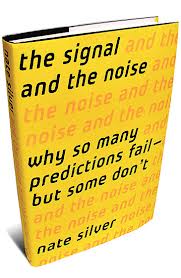
The Signal and the Noise: Why Most Predictions Fail but Some Don't," Nate Silver. Almost a companion piece to Kahneman's "
Thinking, Fast and Slow," which was on
last year's list. Silver attacks misplaced self-confidence in human forecasting and shows us that by embracing uncertainty and weighing the odds, we are capable of making far better predictions than we usually do.
3. "
From Lemons to Lemonade: Squeeze Every Last Drop of Success Out of Your Mistakes," Dean Shepherd. A researcher from Indiana University takes a personal-psychology viewpoint on the mistakes question. With very useful discussions on various ways to bounce back from mistakes, and why we feel so bad when we fail, this book has a prominent place in my "Mistake Learner's Bookshelf." Money quote: "Failure is not the opposite of success."
4. "
Adapt: Why Success Always Starts with Failure," Tim Harford. Looking at human organizations as complex-adaptive systems, Harford shows many examples of groups finding success by responding to initial failure by adapting and learning; as well as an equal number of those who didn't adapt and failed utterly as a result. His views, coming from an economics background, and Amy Edmondson's, from an organizational development perspective, mesh nicely.
5. "
Anna Karenina," by Leo Tolstoy. Translated by Richard Pevear and Larissa Volokhonsky. If you want to learn about human fallibility and the trouble it can cause, you can't do better than to consult the Russian masters. If "
War and Peace" illustrated bureaucratic and organizational folly, this book does the same with social relations. And, did you hear there's a
movie out?