Showing posts with label Steve Jobs. Show all posts

Tuesday, January 22, 2013

Peter Sims on Steve Jobs' biggest mistakes

On the Harvard Business Review blog network, author Peter Sims ("Little Bets: How Breakthrough Ideas Emerge from Small Discoveries," which I reference in the Mistake Bank book) enumerates some of Jobs' mistakes along the way to building Apple into the most valuable company in history. Writes Sims:

Like any creative process, any entrepreneur who wants to invent, innovate, or create must be willing to be imperfect and make mistakes in order to learn what works and what does not.

Well-known failures like NeXT and the Apple Lisa are listed, in addition to other smaller missteps. You might argue with the inclusion of one or more of these mistakes, but the larger point is that Steve Jobs didn't bat 1.000 at Apple. He took a lot of swings, and missed sometimes. In the long run, however, we remember the hits.

Monday, October 31, 2011

Steve Jobs: never be embarrassed about working hard, no matter what the result

From Mona Simpson's eulogy for her brother Steve Jobs:

He was never embarrassed about working hard, even if the results were failures. If someone as smart as Steve wasn’t ashamed to admit trying, maybe I didn’t have to be.

Thursday, October 13, 2011

Lesson from Steve Jobs: Don't Dwell On Your Mistakes

From "The Power of Taking the Big Chance," a compendium of lessons Steve Jobs' colleagues learned from him, as reported by Steve Lohr in the New York Times:

DON’T DWELL ON MISTAKES

Steve Capps, a computer scientist, describes creating the Macintosh, which shipped in 1984, as a constant process of making decisions — part experiment and part product development, with steps ahead mixed with many setbacks. “Steve kind of knew what he wanted, but he didn’t precisely,” says Mr. Capps, who designed software for Macintosh.

Mr. Jobs, Mr. Capps remembers, was the arbiter on countless hardware, software and design choices. “His combination of incisiveness and decisiveness, I think, really explained his success,” Mr. Capps says.

Mr. Jobs was also decisive in recognizing mistakes, even when they were his own. For example, he favored one model of a disk drive — for reading computer programs stored on small, removable so-called floppy disks — while other members of the team championed another design. They kept their disk project going surreptitiously. When they showed him the result, he embraced it. “He turned on a dime,” Mr. Capps says. “Don’t dwell on your mistakes. It’s a great lesson.”

Tuesday, October 4, 2011

Should Edison have listened to customers?

Since Steve Jobs' retirement announcement, there has been lots of talk of Apple's mantra that they must lead the customer ("You can't just ask customers what they want and give it to them.").

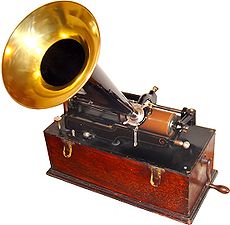
But here's a story about where listening to customer input would have made a real difference to another innovator, Thomas Edison. Edison's original vision for the phonograph was as a tool to record office dictation. After the device's commercial introduction, users had a different idea. This story is from "The Wizard of Menlo Park: How Thomas Alva Edison Invented the Modern World" by Randall Stross.

Everyone who tried out the phonograph - everyone but Edison, that is - was struck by its beautiful reproduction of music, which it handled far better than the sound of the human voice. [An] article in the Atlantic Monthly that had pointed out the machine's shortcomings as a device for office stenography also heaped praise on its ability to magnify musical sounds without distortion. Although there were very few recorded songs available for sale, the reports from the field showed avid interest among consumers. At the first convention of phonograph dealers in 1890, one distributor reported that one customer was "a crank on the subject," spending as much as $100 a week for musical cylinders (about $2,000 in current dollars).

[Edison associate Alfred] Tate and other Edison associates did their best to persuade Edison of the commercial potential of a phonograph marketed for entertainment purposes, but Edison was so attached to his original notion that the phonograph was best suited to office dictation that he could not let go of it....

Tate speculated in his memoirs afterward that Edison was reluctant to accept the phonograph as a machine for playing music because he did not want his phonograph associated with wind-up music boxes. Edison was dedicated to bringing out "useful" inventions, a mission that would be sullied by its association with something as frivolous as Victorian "toys" marketed to adults.


Edison's phonograph was eventually eclipsed by the Victrola, of course, and the man who invented this amazing technology never made a fortune from it. So this is a lesson in innovation: per Steve Jobs, don't ask customers what they want, but after you let them have a product, watch very carefully what they do with it.

[Photograph via Wikipedia]

Tuesday, September 27, 2011

Comparing Edison and Jobs in how they dealt with failure

Speaking of grit, let's consider Thomas Edison and Steve Jobs. In his blog, Bob Sutton posted about the terrific comparison of the two geniuses by Andrew Hargadon. And the most fascinating part of Hargadon's analysis is in highlighting how each dealt with crushing failure:

How both men dealt with their very public failures is a morality tale far richer in their differences than in the simplistic connections between them.

Once ousted, both men jumped immediately back into the arena, intent on proving their detractors wrong. And both failed again. Edison returned to an earlier project, the phonograph, but would soon become embroiled in, and ultimately lose, another standards war. In 1985, Jobs founded NeXT computer, describing in a name his desire for redemption. Interestingly, both invested in new movie technologies (Edison pioneering moving pictures with a system of film, camera, and projector; Jobs investing in Pixar and the development of computer animation).

At the end of their second acts, our two heroes faced their greatest challenges and, here, their paths diverged.

Edison kept roaming. Whether by temperament or temptation, he kept pursuing the next great invention, investing his and investors money in ultimately fruitless ventures such as magnetic iron-ore mining and concrete cast-in-place houses (both doomed by a toxic combination of huge capital costs and his well-known predilection for experimenting).

Jobs returned to Apple. Clearly the wiser for these experiences, he discussed publicly the lessons he learned from his original ouster from Apple and from the failure of NEXT despite its brilliant technology. Even brief conversations with former colleagues told me he had brought a new humility to the company’s innovation efforts. Gone was the effort to prove Apple’s technical genius, or inventive power.

Thursday, September 8, 2011

Steve Jobs in 1997: "You can't start with the technology and figure out how to sell it"

Steve Jobs has been getting a lot of press recently, as if he needed that. But this clip was referenced by VC Brad Feld and is tailor-made for this site. Jobs is answering a confrontational question at the Apple Worldwide Developers Conference in 1997, soon after he returned for his second act at Apple.

The meat of the story, at least for me, happens at 2:00, right after Jobs states that design should start with the customer experience and work backward. He lays out that starting with great technology and figuring out how to market it is wrong--and he says that he himself has made this mistake "more than anyone else in this room."

Also, while clearly under attack, Jobs shows his maturity by not only not immediately getting defensive or attacking his questioner, but in fact taking some time to reflect and think, during a high-pressure, public address, and ultimately giving a powerfully thoughtful response. We can all learn from that.

Thursday, April 28, 2011

Steve Jobs admits Apple mistakes with location data... or does he?

I read this New York Times article with significant interest: "Jobs Concedes Apple Mistakes." The article refers to the issue of iPhone users discovering that a large file of their past locations was stored on the handset.

It's notable whenever a high-profile CEO, confronted with a public-relations issue, comes out and takes accountability for mistakes.

When I read through the article, and the AllThingsD interview Q+A that inspired it, I was hard-pressed to find a real expression of remorse or even of admitting mistakes. Here's the closest thing I read:

[Interviewer:] Is there anything that you guys have learned over the last week or so and take away from this?

[Apple SVP Scott] Forstall: One thing I think we have learned is that the cache we had on the system–the point of that cache, is we do all the location calculations on the phone itself so no location calculations are done separately. You can imagine in an ideal world the entire crowdsourced database is on the phone and it just never has to talk to a server to do these calculations (or) to even get the cache.

What we do is we cache a subset of that. We picked a size, around 2MB, which is less than half a song. It turns out it was fairly large and could hold items for a long time.

We had that protected on the system. It had root protection and was sandboxed from any other application. But if someone hacks their phone and jailbreaks it, they can get to this and misunderstand the point of that.

It’s all anonymous and cannot be traced back to any individual phone or person. But we need to be even more careful about what files are on the phone, even if they are protected.

Also, there was a hell of a lot of pushback. For example:

[Interviewer]: A bunch of folks on the regulatory side, both in the U.S. and elsewhere, said they are going to look into this. Do you guys plan on testifying before Congress? How active do you personally and does Apple want to be?

Jobs: I think Apple will be testifying. They have asked us to come and we will honor their request, of course. I think it is great that they are investigating this and I think it will be interesting to see how agressive or lazy the press is on this in terms of investigating the rest of the participants in the industry and finding out what they do. Some of them don’t do what we do. That’s for sure.

In fact, the closest thing to a mistake discussed was iPhone users' mistakes:

[Jobs]: We build a crowdsourced database of Wi-Fi and cell tower hot spots, but those can be over 100 miles away from where you are. Those are not telling you anything abut your location. That’s what people saw on the phone and mistook it for location.

So, in summary: Jobs didn't concede any mistakes, and his lieutenant made the hedgiest-possible admission that the location cache stored far more data than was needed.

This is more a lesson in good PR than in CEO candor and learning from mistakes. Jobs and his team admitted 5-10% culpability and defended the remainder, blaming users, competitors and the press for the issue. And they did it so smoothly that they convinced the NYT headline writer that Jobs himself had "conceded" location mistakes--in fact, getting credit for candor and remorse while not showing any.